
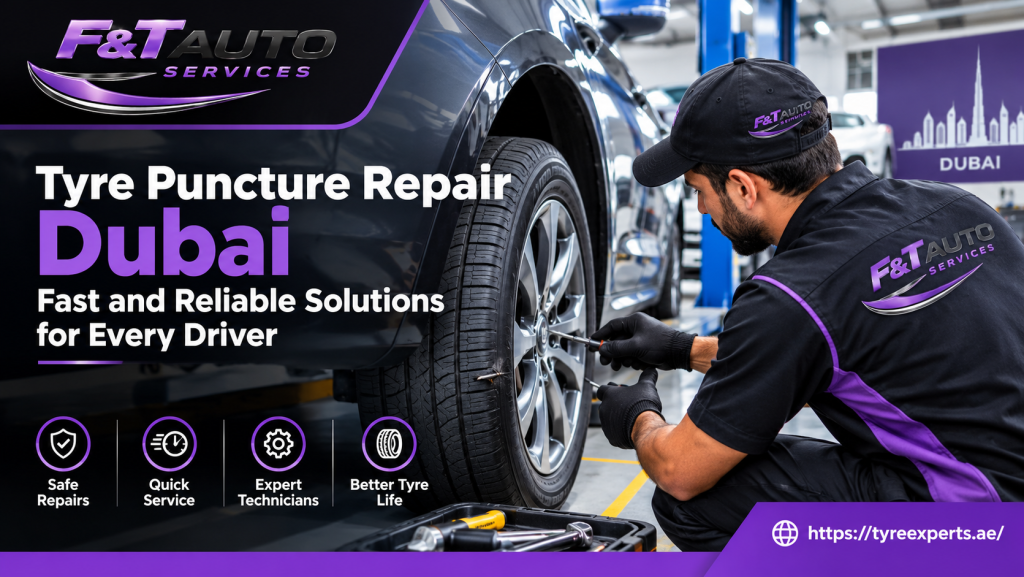

A flat tyre can disrupt your daily commute, delay an important meeting, or turn a family trip into an unexpected problem. Dubai drivers face different road conditions, from busy city streets to high-speed highways, making proper tyre maintenance essential for safe and comfortable driving.
Tyre Puncture Repair Dubai is an important service for motorists who need to restore tyre safety and avoid unnecessary replacement costs. Understanding the causes of punctures, recognising warning signs, and choosing a professional repair solution can help you make informed decisions when tyre trouble occurs.
At Tyre Experts UAE, drivers can explore tyre-related services and maintenance solutions to help keep their vehicles road-ready.
What Causes Car Tyre Punctures in Dubai?
A puncture occurs when a sharp object or other damage allows air to escape from a tyre. Identifying the cause helps determine the appropriate repair method and whether the tyre remains safe to use.
Common causes include:
- Nails and screws: Construction debris and sharp metal objects can penetrate the tyre tread.
- Broken glass: Roadside debris may cause small holes and gradual air loss.
- Potholes and road impacts: Strong impacts can damage the tyre structure or wheel.
- Incorrect tyre pressure: Underinflation can increase heat and stress, especially during long journeys.
- Worn tyres: Ageing rubber and insufficient tread depth can reduce overall road safety.
Regular inspections and correct inflation can help reduce avoidable tyre problems.
5 Warning Signs Your Tyre Needs Immediate Attention
Recognising the early symptoms of a puncture can prevent further damage and help you respond safely.
1. Frequent Loss of Air Pressure
If one tyre repeatedly loses pressure, it may have a small puncture, a leaking valve, or a problem around the wheel rim.
2. Dashboard Tyre Pressure Warning
A tyre pressure monitoring system may alert you when pressure drops below the recommended level. Check the tyre promptly rather than ignoring the warning.
3. Visible Nails or Screws
An object embedded in the tread may cause a slow leak. Avoid pulling it out yourself, as doing so can accelerate air loss.
4. Changes in Steering or Handling
A tyre losing pressure can affect steering response and vehicle stability. If the car feels unusual, slow down gradually and move to a safe location.
5. Repeated Need for Inflation
If you must inflate the same tyre frequently, arrange a professional inspection to identify the underlying issue.
How Does Professional Tyre Puncture Repair Work?
A reliable repair begins with an inspection rather than simply sealing the visible hole. The technician must establish whether the damage can be repaired safely.
The usual process involves the following steps:
- Initial inspection: The technician checks the tyre, tread, sidewall, valve, and visible damage.
- Tyre removal: The tyre is removed from the wheel when necessary so its internal condition can be examined.
- Damage assessment: The technician evaluates the puncture’s location, size, and any internal damage.
- Suitable repair: If the tyre meets applicable repair criteria, an appropriate internal repair method is used.
- Refitting and testing: The tyre is inflated to the recommended pressure, checked for leaks, and refitted correctly.
A permanent repair is not suitable for every puncture. Damage to the shoulder or sidewall, significant internal damage, or a tyre driven while severely underinflated may require replacement. Michelin also recommends professional inspection to determine whether a tyre can be repaired safely.
When Should You Repair or Replace a Punctured Tyre?
The correct decision depends on the tyre’s condition, not simply the size of the visible hole.
Repair may be possible when:
- The puncture is in an approved repairable area of the tread.
- The damage falls within the tyre manufacturer’s repair limits.
- The tyre has no disqualifying internal damage.
- The tyre has not suffered damage from being driven while flat.
Replacement may be necessary when:
- The sidewall or shoulder is damaged.
- The internal structure has been compromised.
- The tyre has a bulge, serious cuts, or excessive wear.
- The puncture is too large or otherwise outside approved repair limits.
A qualified technician should inspect the tyre before recommending either option. This helps protect your safety while avoiding unnecessary replacement when a suitable repair is possible.
Why Choose a Professional Dubai Tyre Shop?
Choosing an experienced dubai tyre shop can make tyre maintenance more convenient and help you make better decisions about vehicle safety.
Consider these factors when selecting a service provider:
- Experienced technicians: Look for professionals who assess tyre damage before recommending a solution.
- Appropriate equipment: Proper inspection, fitting, inflation, and leak-testing equipment support reliable work.
- Transparent pricing: Ask for the repair cost and any additional charges before authorising the work.
- Quality replacement options: If the tyre cannot be repaired, choose a suitable replacement that meets your vehicle manufacturer’s specifications.
- Additional tyre care: Ask whether pressure checks, wheel inspections, or other maintenance services are appropriate for your vehicle.
A dependable provider should explain the condition of your tyre clearly and prioritise safety over a quick fix.
Does a Puncture Affect Wheel Alignment and Balancing?
A puncture does not automatically mean your wheels require alignment or balancing. However, related issues may need attention depending on the circumstances.
Wheel alignment and balancing serve different purposes. Alignment adjusts wheel angles to the vehicle manufacturer’s specifications, while balancing corrects uneven weight distribution in a wheel-and-tyre assembly.
If your vehicle pulls to one side, the steering wheel sits off-centre, or you notice uneven tread wear, a wheel alignment service may be worth considering. If you experience vibration at certain speeds, a wheel balance check may be appropriate.
A technician can inspect the wheels and recommend the relevant service based on the symptoms rather than suggesting unnecessary work.
What Should You Do If You Get a Flat Tyre on the Road?
If you notice a puncture while driving, your immediate priority should be safety.
- Keep both hands on the steering wheel and ease off the accelerator.
- Avoid sudden braking, sharp turns, or abrupt manoeuvres.
- Move to a safe stopping area away from moving traffic when possible.
- Switch on your hazard lights after stopping.
- Do not drive on a visibly flat tyre, as this can damage the tyre and wheel.
- Contact roadside assistance or a suitable repair provider if you cannot safely change the wheel.
Never attempt to inspect or change a tyre while standing in a dangerous traffic lane. If your vehicle has run-flat tyres, follow the manufacturer’s restrictions for speed and distance, and arrange a professional inspection as soon as possible.
Tips to Prevent Future Tyre Punctures
Although punctures cannot always be prevented, regular maintenance can help reduce risks and identify problems early.
- Check tyre pressure at least monthly and before long journeys, following your vehicle manufacturer’s recommendations.
- Inspect tread condition and look for cuts, bulges, or embedded objects.
- Avoid driving over sharp debris and potholes whenever it is safe to do so.
- Replace tyres that are excessively worn or damaged.
- Check tyre pressure when the tyres are cold for a more accurate reading.
- Arrange periodic tyre inspections, particularly before highway trips.
These simple habits can support safer driving, more consistent handling, and longer tyre life.
Frequently Asked Questions
1. Can every punctured car tyre be repaired?
No. Some tread punctures can be repaired if they meet the manufacturer’s requirements. Sidewall damage, significant internal damage, and other unsafe conditions usually require replacement.
2. How long does a tyre puncture repair take?
The time depends on the damage, tyre type, and workshop workload. A straightforward repair may take around 20–40 minutes, but more complex cases can take longer. Ask the service provider for an estimate.
3. Is it safe to drive with a punctured tyre?
Driving on a flat or severely underinflated tyre can cause further damage and loss of control. Stop in a safe place and arrange assistance. Only move the vehicle as necessary to reach safety.
4. How do I know if my tyre needs replacement instead of repair?
A professional inspection can determine whether the puncture is repairable. Sidewall damage, structural problems, excessive wear, and damage caused by driving on a flat tyre are important reasons replacement may be necessary.
5. Where can Dubai drivers get help with tyre problems?
Visit Tyre Experts UAE to explore tyre services and vehicle maintenance options. Contact the team to confirm service availability, pricing, and the most suitable solution for your vehicle.
Conclusion
A punctured tyre does not always require a new tyre, but it should never be ignored. Understanding the warning signs, stopping safely, and arranging a professional inspection can help prevent further damage and reduce the risk of unsafe driving.
For drivers looking for Tyre Puncture Repair Dubai, choosing a service provider that prioritises proper inspection, suitable repair methods, and honest advice is essential. With regular maintenance and timely attention to tyre problems, you can help keep your vehicle ready for everyday journeys and longer drives across the UAE.
Explore Tyre Experts UAE for tyre-related services and maintenance information.