
Your car tyres are the only parts of your vehicle that maintain direct contact with the road. Their condition affects braking, steering, grip and overall driving safety. However, many drivers continue using tyres even after they develop visible damage or become excessively worn.
Knowing when to replace car tyres can help you avoid unexpected breakdowns and reduce the risk of losing control, especially during sudden braking or wet-road driving. In Dubai, high temperatures and regular exposure to demanding road conditions make routine tyre inspections particularly important.
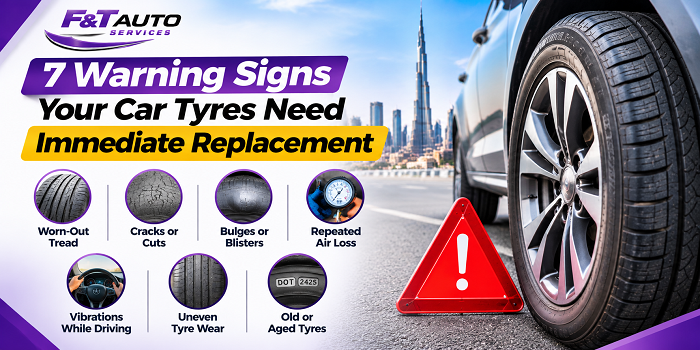
Some warning signs are easy to notice, while others may require a professional inspection. Here are seven signs that your car tyres may need immediate replacement.
When Should You Replace Your Car Tyres?
You should replace a car tyre when its tread reaches the applicable legal limit, its structure is damaged, or it develops serious defects such as sidewall bulges, exposed cords or deep cracks. A tyre that repeatedly loses pressure should also be inspected to identify whether it can be safely repaired or needs replacement.
Important: If you notice a bulge, exposed internal cords, a deep cut or severe structural damage, do not continue driving on that tyre. Stop in a safe place and arrange professional assistance.
1. Tyre Tread Is Worn Down
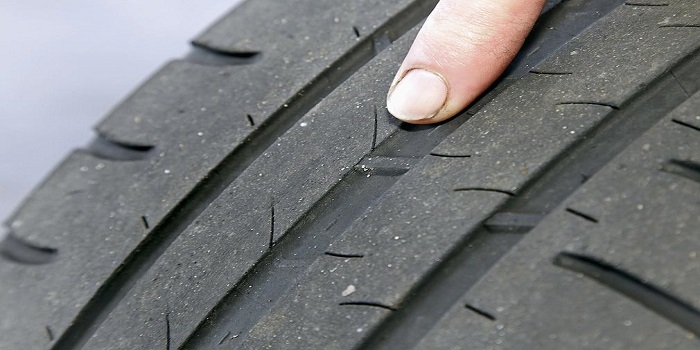
The tread is the patterned rubber surface that touches the road. Its grooves help provide grip and move water away from the contact area. As the tyre wears down, its ability to maintain traction can decrease, particularly on wet roads.
If the tread becomes too shallow, your vehicle may take longer to stop and become more difficult to control in wet conditions.
How to check your tyre tread depth
- Look for the small raised bars inside the main tread grooves. These are called tread wear indicators.
- If the tread surface becomes level with these indicators, the tyre has reached its wear limit.
- Check several points across the tyre because wear may not be even.
- Ask a tyre professional to measure the tread depth if you are unsure.
Do not wait until the tread is completely smooth. Replace tyres before they reach the applicable legal limit, particularly if you regularly drive in rain.
2. Cracks or Cuts Appear on the Sidewall
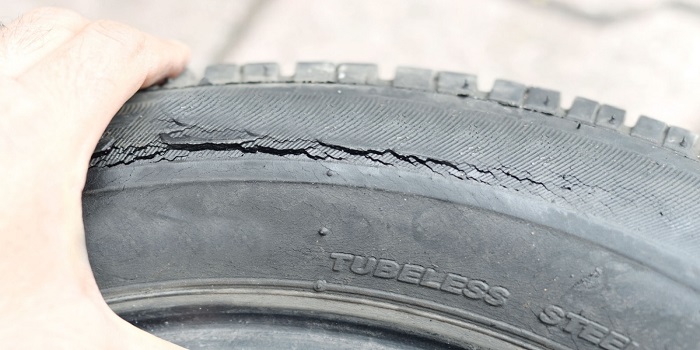
The sidewall is the outer side of the tyre. It flexes while you drive and helps support the vehicle’s weight. Cracks, deep cuts or visible damage on this area should never be ignored.
Sidewall damage may develop because of ageing, prolonged exposure to heat and sunlight, impact with kerbs or potholes, or other forms of physical damage.
Small surface marks may not always mean the tyre needs replacement. However, deep cracks, cuts that expose internal material or damage that affects the tyre structure require immediate professional assessment. Structural sidewall damage generally cannot be repaired safely.
If you notice significant sidewall damage, avoid driving on the tyre and arrange an inspection.
3. Bulges or Blisters Appear on the Tyre
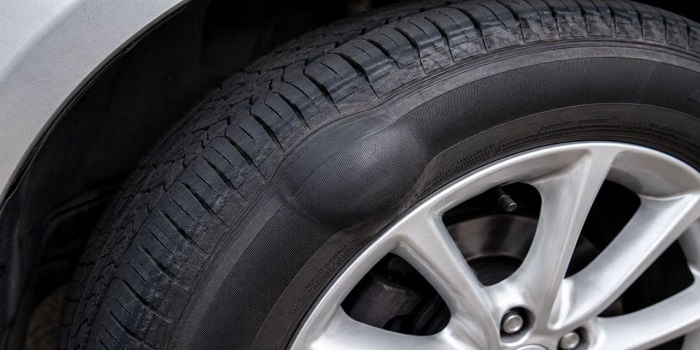
A bulge or blister on the tyre sidewall is one of the most serious warning signs. It may indicate that the internal structure has been damaged, allowing air pressure to push the outer rubber outward.
This can happen after hitting a pothole, driving over a sharp road edge or striking a kerb.
Why should you take it seriously?
- The tyre structure may no longer be strong enough to handle normal driving pressure.
- The damaged area can become weaker over time.
- There is an increased risk of sudden tyre failure.
Can a tyre with a sidewall bulge be repaired?
No. A structural sidewall bulge is not considered safely repairable. The tyre should be replaced. Avoid driving on it and arrange roadside assistance or a safe replacement.
4. Your Tyres Keep Losing Air Pressure
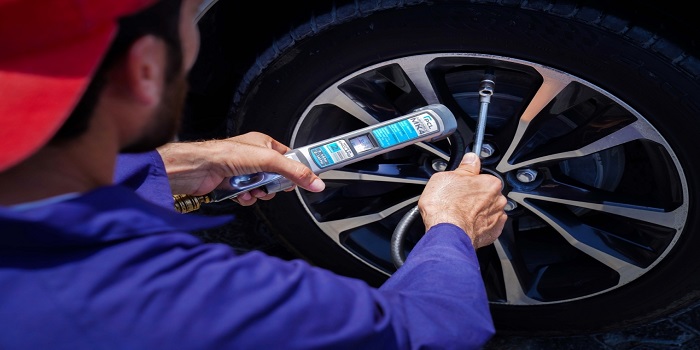
Do you regularly find that one tyre has less air than the others? Repeated pressure loss is a warning sign that something may be wrong.
Common causes include:
- A nail or sharp object embedded in the tread.
- A damaged valve stem.
- Leakage around the wheel rim.
- A crack or other tyre damage.
- An incorrectly fitted or damaged tyre.
Check your tyre pressure using a reliable gauge and compare it with the vehicle manufacturer’s recommended pressure, usually displayed on the driver’s door placard or in the owner’s manual.
When is puncture repair possible?
Some small punctures in the repairable tread area may be repaired after a professional inspection. However, punctures in the sidewall or shoulder area, large holes and damage that has affected the internal structure may require tyre replacement.
If you are looking for tyre puncture repair in Dubai, choose a service that checks the inside of the tyre rather than simply sealing the visible hole.
5. Your Car Vibrates or Feels Unstable
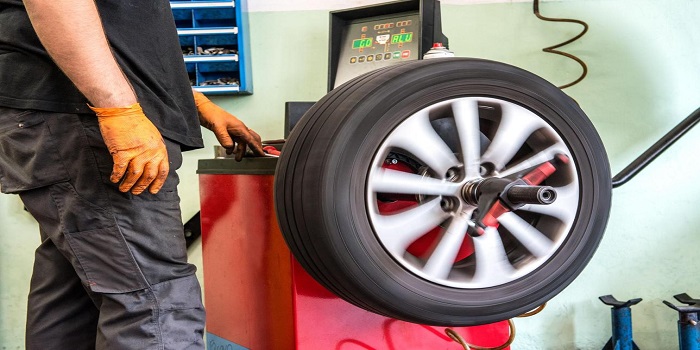
Unusual vibration through the steering wheel, floor or seats can indicate a problem with your tyres or wheels.
Possible causes include:
- Uneven tyre wear.
- Incorrect wheel balancing.
- A damaged or deformed tyre.
- A bent wheel rim.
- Suspension or steering problems.
If the vibration begins after hitting a pothole or continues even after balancing, have the tyres and wheels inspected.
A wheel alignment service may help if incorrect wheel angles are contributing to uneven wear or handling problems. However, alignment does not repair a structurally damaged tyre.
Do not assume every vibration is caused by wheel balancing. A proper inspection is needed to identify the actual issue.
6. You Notice Uneven or Rapid Tyre Wear
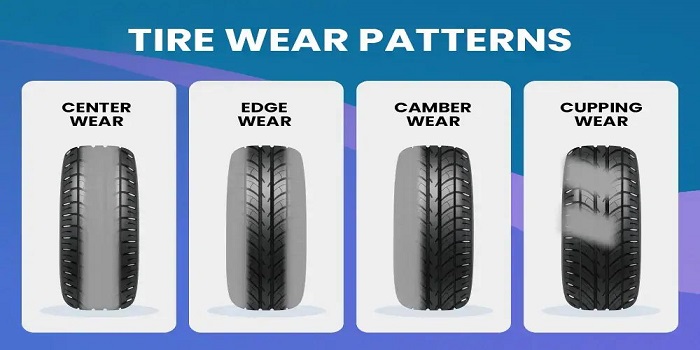
Ideally, tyre tread should wear reasonably evenly across its surface. If one side is wearing faster than the other, or certain areas appear noticeably smoother, your vehicle may have an underlying problem.
Common causes include:
- Incorrect tyre pressure.
- Poor wheel alignment.
- Incorrect wheel balancing.
- Worn suspension components.
- Infrequent tyre rotation.
Uneven wear does not always mean you need to replace all four tyres. A technician should inspect the tread depth and identify the reason for the wear.
If the tyre has sufficient tread and no structural damage, correcting the underlying issue may help prevent further uneven wear. But if the tyre has become excessively worn or unsafe, replacement is necessary.
Drivers searching for wheel alignment in Dubai should consider an inspection when they notice uneven tread wear, steering pull or an off-centre steering wheel.
7. Your Tyres Are Old or Show Signs of Ageing
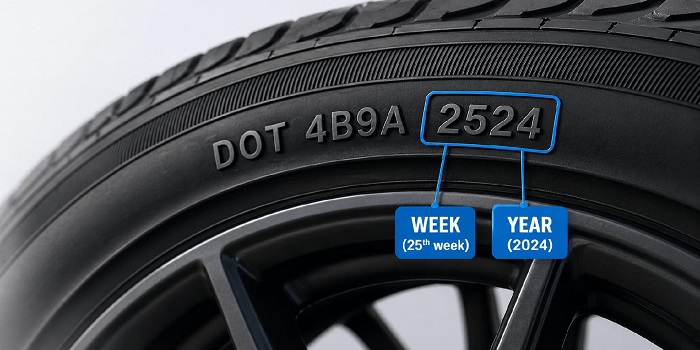
Tyres can deteriorate even when a vehicle is not driven frequently. Over time, rubber can become harder, develop cracks and lose some of its original performance characteristics.
This is why checking tyre age is just as important as checking tread depth.
How to check the tyre manufacturing date
Look for the four-digit date code at the end of the DOT identification marking on the tyre sidewall.
For example:
- 2425 means the tyre was manufactured in the 24th week of 2025.
- The first two digits represent the manufacturing week.
- The last two digits represent the manufacturing year.
The manufacturing date does not automatically tell you whether a tyre is safe or unsafe. Actual condition, storage, usage and the tyre manufacturer’s age-related recommendations also matter.
If your tyres are several years old, have visible cracks or show signs of deterioration, ask a professional to inspect them. Do not rely only on tread depth to judge their condition.
Can a Damaged Tyre Be Repaired or Must It Be Replaced?
Not every damaged tyre needs replacement. Some punctures can be repaired safely, but other types of damage affect the tyre’s structure and make continued use unsafe.
| Tyre problem | Typical action |
| Small puncture in a repairable tread area | Professional inspection; repair may be possible |
| Sidewall puncture | Replacement generally required |
| Sidewall bulge | Replace the tyre |
| Exposed internal cords | Replace the tyre |
| Deep cuts or structural damage | Replace the tyre |
| Tread at the wear indicator | Replace the tyre |
| Uneven wear with adequate tread | Inspect alignment, pressure and suspension |
A proper repair assessment may require removing the tyre from the wheel to inspect its inside. Never assume that a plug or sealant makes every puncture safe.
How Dubai’s Heat and Driving Conditions Affect Tyres
Dubai’s hot climate can place additional stress on car tyres. High ambient temperatures, road surface heat, incorrect inflation and heavy vehicle loads can all affect tyre performance.
Here are a few practical precautions for drivers:
- Check tyre pressure regularly when the tyres are cold.
- Follow the pressure recommended by your vehicle manufacturer.
- Inspect the tread and sidewalls for cracks, cuts and bulges.
- Avoid driving over potholes and sharp road edges where possible.
- Check tyres before long journeys.
- Have damaged or unusually worn tyres inspected by professionals.
Remember that tyre pressure can increase as tyres warm up during driving. Do not release air from warm tyres simply because the pressure reading is higher than the cold-pressure recommendation.
What Should You Do If You Notice These Warning Signs?
If you notice any of the warning signs discussed above, take the following steps:
- Stop safely: If you notice a bulge, exposed cords or serious damage, avoid continuing your journey on that tyre.
- Check the condition: Look for visible cracks, cuts, punctures and uneven tread wear without putting yourself in danger.
- Check tyre pressure: Use a pressure gauge and compare the reading with your vehicle manufacturer’s recommendation.
- Get a professional inspection: Ask a technician to assess whether the tyre can be repaired or needs replacement.
- Check related components: If there is uneven wear or vibration, ask whether wheel alignment, balancing or suspension inspection is also needed.
If you need tyre replacement, puncture inspection or wheel alignment in Dubai, you can explore the services offered by F&T Auto Services (Tyre Experts).
Frequently Asked Questions
1. How do I know when my car tyres need replacing?
Look for worn tread, sidewall cracks, bulges, exposed cords, repeated pressure loss and severe uneven wear. Any structural damage should be inspected immediately.
2. What is the minimum safe tyre tread depth?
The commonly recognised minimum tread depth for passenger car tyres in many markets is 1.6 mm, but this should not be treated as a target for replacement. Grip can deteriorate before the tyre reaches that limit. Check the applicable UAE requirements and replace tyres earlier when their condition warrants it.
3. Can I drive with cracked tyres?
It depends on the severity and location of the cracks. Minor surface ageing marks need assessment, but deep cracks or cracks exposing internal material can indicate structural damage. Avoid driving on a tyre with serious damage until it has been inspected.
4. Is a tyre with a sidewall bulge safe to drive?
No. A sidewall bulge can indicate internal structural damage and an increased risk of sudden tyre failure. Do not continue driving on it. Arrange a safe replacement.
5. Can a punctured tyre be repaired instead of replaced?
Some small punctures in the repairable tread area can be repaired after inspection. Sidewall damage, large punctures and structural damage generally require replacement.
6. How many years do car tyres last in Dubai?
There is no single lifespan that applies to every tyre. Usage, storage, driving conditions, maintenance and manufacturer recommendations all affect tyre life. Inspect tyres regularly and follow the manufacturer’s age-related guidance.
7. Should I replace all four tyres at the same time?
Not always. It depends on the condition, tread depth and vehicle requirements. However, replacing tyres in pairs on the same axle is often recommended to maintain balanced handling. Some vehicles, especially certain all-wheel-drive models, have specific requirements, so check the owner’s manual.
8. Can uneven tyre wear be fixed with wheel alignment?
Wheel alignment can correct incorrect wheel angles that contribute to uneven wear. However, it cannot restore tread that has already worn away or repair structural tyre damage.
9. How can I check the manufacturing date of my tyres?
Look for the four-digit date code at the end of the DOT marking on the tyre sidewall. For example, 2425 represents the 24th week of 2025.
10. Is it dangerous to drive with worn-out tyres?
Yes. Worn tyres can reduce traction, increase stopping distances in certain conditions and make it harder to maintain control, particularly on wet roads.
Final Thoughts
Your tyres play a major role in your vehicle’s safety, so small warning signs should never be ignored. Worn tread, sidewall cracks, bulges, repeated air loss and uneven wear can all indicate that your tyres need professional attention.
Regular inspections and timely replacement can help reduce the risk of unexpected tyre failure. If you are unsure about your tyre condition, get it checked by a qualified technician before continuing to drive.