
Dubai is known for its hot summers, long sunny days and busy roads. While drivers often think about keeping the engine coolant, battery and air conditioning in good condition during summer, tyres can easily be overlooked.
That is a mistake because your tyres are constantly exposed to heat from the road, sunlight and friction while driving. The effect becomes more noticeable during long highway journeys or when a tyre already has low pressure, uneven wear, cracks or other damage.
The good news is that most tyre problems can be spotted early with a few simple checks. Understanding how Dubai’s heat affects tyres can help you avoid unnecessary breakdowns and make your daily driving safer.
Why Is Dubai’s Heat Hard on Car Tyres?
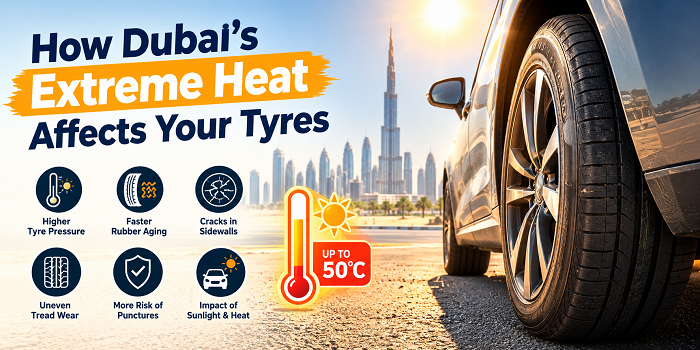
Tyres are designed to operate across a range of temperatures, but extreme heat puts additional demands on them. As you drive, friction between the tyres and road generates heat. The tyres then become warmer than the surrounding air.
The situation can be more demanding during Dubai’s summer months, particularly when you combine high ambient temperatures with highway speeds, heavy vehicle loads and incorrect tyre pressure.
Dubai’s Roads and Transport Authority (RTA) has specifically advised motorists to check tyre pressure during summer and make sure tyres are structurally sound and free of cracks to reduce the risk of problems in high temperatures.
So, the issue isn’t simply that “hot weather destroys tyres.” The bigger concern is how heat interacts with tyre condition, pressure, age, driving habits and maintenance.
What Happens to Tyres in Extreme Heat?
1. Tyre Pressure Increases as Tyres Get Hot
One of the most important things drivers should understand is that tyre pressure changes as the tyre temperature changes.
When you drive, the tyre heats up and the air inside expands, causing the pressure reading to increase. This is why tyre manufacturers recommend checking pressure when the tyres are cold rather than immediately after a long drive. Michelin also advises drivers not to deflate a hot tyre simply because the pressure reading appears higher.
Always use the pressure recommended by your vehicle manufacturer. You can usually find it on the driver’s door-pillar sticker, inside the fuel-filler area or in the owner’s manual.
2. Underinflated Tyres Can Build Up More Heat
Low tyre pressure is especially important in hot weather.
An underinflated tyre flexes more as it rolls. That extra flexing generates additional heat and can contribute to premature wear or tyre damage. Michelin notes that underinflation increases heating and can become a serious safety issue, particularly at higher speeds.
This is why simply checking whether a tyre “looks okay” isn’t enough. A tyre can appear normal while still having incorrect pressure.
3. Heat Can Speed Up Existing Tyre Damage
Heat is particularly concerning when a tyre already has problems.
Cuts, cracks, bulges, worn tread or previous damage can compromise a tyre’s condition. High temperatures don’t necessarily create every one of these problems, but they can add stress to a tyre that is already weakened.
RTA’s summer guidance recommends checking that tyres are structurally sound and free from cracks before driving in high temperatures.
4. Tyres Can Wear Unevenly
Incorrect pressure and poor wheel alignment can contribute to uneven tread wear. When tyres are not wearing evenly, some areas may become significantly more worn than others.
If you notice one shoulder wearing faster than the rest of the tread, don’t simply replace the tyre without investigating the cause. Alignment, suspension and pressure should also be checked.
Tyre Experts’ Dubai wheel-alignment guidance notes that alignment can affect tyre wear, steering response and fuel consumption, particularly in Dubai’s high-speed driving environment.
Does Parking in the Sun Damage Tyres?
Long periods of direct sunlight expose tyres to additional heat and UV radiation.
If you regularly park outside for several hours, try to use shaded parking whenever practical. RTA’s 2026 summer guidance also recommends avoiding direct sunlight for extended periods where possible as part of vehicle protection.
You should also inspect the visible sidewalls from time to time. Look for:
- Fine cracks
- Deep cuts
- Bulges
- Objects stuck in the tyre
- Unusual wear
- Damage around the valve
If something looks unusual, have the tyre inspected instead of assuming it is safe because it still holds air.
How to Check Tyre Pressure Safely in Dubai
Checking your tyre pressure is one of the easiest ways to look after your tyres.
For an accurate reading:
- Check the pressure when the tyres are cold.
- Use the vehicle manufacturer’s recommended pressure.
- Check all four tyres.
- Don’t forget the spare tyre.
- Inspect the tyres visually while checking them.
- Check pressure before a long road trip.
- Never release air simply because a hot tyre shows a higher pressure reading.
Michelin recommends checking tyre pressure at least monthly and before extended driving, with the measurement taken when the tyres are cold.
If you regularly drive long distances in the UAE, making pressure checks part of your routine is a simple habit that can prevent bigger problems.
What Is the Right Tyre Pressure for Dubai?
There isn’t one universal tyre pressure that is correct for every car in Dubai.
The correct figure depends on the vehicle and its load. Always follow the pressure specified by the vehicle manufacturer rather than using a generic number from another car or tyre.
The recommended pressure is normally shown on a sticker inside the driver’s door area or in the owner’s manual. Front and rear tyres may also have different recommended pressures.
The important point is consistency: check your tyres when cold and keep them at the manufacturer’s recommended pressure.
Signs That Your Tyres May Be Struggling With the Heat
You don’t need to wait for a tyre failure before taking action.
Arrange an inspection if you notice:
- Repeated pressure loss
- Visible cracks
- A bulge on the sidewall
- Uneven tread wear
- Excessive vibration
- Steering pulling to one side
- A tyre that repeatedly needs air
- Damage from a puncture
- Unusual noise from a wheel
A tyre that keeps losing pressure deserves attention. It could have a puncture, valve problem, wheel issue or other air leak.
If you are unsure whether a damaged tyre can be repaired or needs replacement, have it inspected by a qualified technician.
Does Wheel Alignment Matter More in Dubai?
Wheel alignment isn’t directly a “heat protection” service, but it can play an important role in maintaining tyres in Dubai.
If your wheels are misaligned, the tyres may wear unevenly. Over time, that can reduce their usable life and affect handling.
This is particularly worth checking if you’ve recently:
- Hit a pothole or kerb
- Changed your tyres
- Noticed uneven tread wear
- Felt the vehicle pulling to one side
- Found that the steering wheel is no longer centred
A professional wheel alignment can identify and correct wheel-angle issues. Tyre Experts provides wheel alignment services in Dubai using computerized equipment and checks alignment against vehicle specifications.
What About Wheel Balancing?
Wheel balancing is different from wheel alignment.
Alignment deals with the angles of the wheels, while balancing addresses uneven weight distribution around the wheel and tyre.
If you feel vibration through the steering wheel, particularly at certain speeds, balancing may need to be checked.
Both services are useful parts of overall tyre maintenance, but they solve different problems.
Don’t Ignore a Slow Puncture
A small puncture can sometimes cause a tyre to lose air slowly rather than going completely flat.
This is easy to overlook because you may only need to add air occasionally. However, repeatedly driving on a tyre that is losing pressure can lead to underinflation and additional heat buildup.
If you keep topping up the same tyre, have it inspected rather than treating the pressure loss as normal.
Tyre Experts provides tyre change and puncture repair services in Dubai and recommends professional inspection to determine whether a damaged tyre can be repaired or should be replaced.
How to Protect Your Tyres During Dubai’s Summer
You don’t need a complicated maintenance routine. A few consistent habits can make a difference.
Check the pressure regularly
Make pressure checks part of your monthly vehicle routine and check again before long journeys.
Inspect the sidewalls
Look for cracks, cuts, bulges and other visible damage.
Check the tread
Don’t rely only on the tyre’s appearance from a distance. Examine the tread for uneven wear and signs that the tyre is approaching the end of its useful life.
Avoid unnecessary direct sunlight
Use shaded parking where practical, especially when the vehicle will remain parked for a long period.
Don’t ignore warning signs
Repeated air loss, vibration, pulling or visible damage should be checked promptly.
Maintain alignment and balancing
Correct alignment and balancing can help maintain even tyre wear and a smoother driving experience.
Don’t rely only on TPMS
A tyre-pressure monitoring system is useful, but it shouldn’t replace regular physical inspection and pressure checks.
Does Nitrogen Stop Heat-Related Tyre Problems?
Nitrogen is sometimes promoted as a solution for hot-weather tyre problems, but it shouldn’t be treated as a replacement for regular maintenance.
Regardless of whether your tyres contain compressed air or nitrogen, pressure still needs to be checked regularly. Michelin explicitly states that nitrogen-filled tyres still require regular pressure checks.
The most important thing is maintaining the correct pressure recommended by your vehicle manufacturer.
When Should You Replace Your Tyres in Dubai?
There isn’t a single mileage figure that tells every Dubai driver when to replace tyres.
Replacement depends on factors such as:
- Tyre age
- Tread condition
- Cracks or sidewall damage
- Driving habits
- Vehicle type
- Road conditions
- Correctness of tyre pressure
- Previous puncture or impact damage
If a tyre has significant damage or has reached the end of its safe service life, repairing it isn’t a substitute for replacement.
A professional tyre inspection can help determine whether the tyre is still suitable for use.
Dubai Summer Tyre Safety Checklist
Before a long drive, take a few minutes to check:
- Tyre pressure is at the vehicle manufacturer’s recommended level.
- Pressure was checked when the tyres were cold.
- No visible cracks or bulges are present.
- Tread wear looks even.
- There are no nails, screws or other objects embedded in the tyre.
- No tyre is repeatedly losing air.
- The spare tyre has been checked.
- Wheel alignment is checked if the vehicle pulls to one side.
- Wheel balancing is checked if you experience vibration.
- Damaged tyres have been professionally inspected.
This simple routine can help identify problems before they become an emergency on a Dubai road.
When Should You Visit a Tyre Shop?
You don’t have to wait until you have a flat tyre.
A professional tyre shop can be useful when:
- You are buying a new set of tyres.
- One tyre keeps losing pressure.
- You notice cracks or bulges.
- Your vehicle pulls to one side.
- You feel vibration at higher speeds.
- Your tyres show uneven wear.
- You are planning a long UAE road trip.
- You aren’t sure whether a damaged tyre can be repaired.
For drivers looking for a Best Tyre Shop In Dubai, the priority should be professional advice, suitable tyres and proper installation rather than simply choosing the cheapest option.
Tyre Experts, operated by F&T Auto Services, offers tyre sales and tyre services in Dubai, along with wheel alignment and other automotive services.
Final Thoughts
Dubai’s extreme heat doesn’t mean your tyres are automatically unsafe. The bigger issue is neglecting tyres that already have low pressure, uneven wear, cracks, punctures or other damage.
Regular pressure checks, visual inspections, correct alignment and timely repairs or replacement can help keep your tyres in better condition throughout the year.
The next time you search for Tyre Shop Near Me, don’t wait until a tyre problem becomes an emergency. A quick inspection and a few minutes of regular maintenance can make a significant difference to safety, comfort and tyre life on Dubai’s roads.
Frequently Asked Questions
1. Does Dubai heat damage car tyres?
High temperatures place additional demands on tyres, particularly when combined with underinflation, high speeds, heavy loads or existing tyre damage. Regular inspection and correct pressure help reduce the risk.
2. Does hot weather increase tyre pressure?
Yes. Tyre pressure increases as the tyre heats up during driving. This is why pressure should preferably be checked when the tyres are cold.
3. How often should I check tyre pressure in Dubai?
A practical routine is to check it at least once a month and before long journeys. Always follow the vehicle manufacturer’s recommended pressure.
4. Should I let air out of hot tyres?
No. Don’t release air simply because the pressure reading is higher after driving. Tyre pressure naturally rises as tyres heat up. Check and adjust pressure when the tyres are cold.
5. Can sunlight cause tyre cracks?
Long-term exposure to heat and UV radiation can contribute to tyre ageing. Inspect the sidewalls regularly for cracks or other visible damage and use shaded parking when practical.
6. Why do tyres lose pressure in summer?
Pressure loss can come from punctures, valve problems, wheel issues or normal gradual air loss. Hot weather itself doesn’t mean a tyre should constantly lose pressure, so repeated pressure loss should be investigated.
7. How can I protect my tyres during Dubai’s summer?
Keep the tyres at the manufacturer’s recommended pressure, inspect them regularly, avoid prolonged direct sunlight where practical, maintain proper alignment and balancing, and address punctures or visible damage promptly.
8. Should I check my tyres before a long UAE road trip?
Yes. Check tyre pressure when cold, inspect the tread and sidewalls, check the spare tyre and address any leaks or visible damage before starting a long journey. Michelin recommends checking tyre pressure before extended driving.
9. Does nitrogen mean I don’t need to check tyre pressure?
No. Nitrogen does not remove the need for regular pressure checks. Tyres filled with nitrogen still need to be inspected and maintained at the correct pressure.
10. When should I visit a tyre shop?
Visit a professional tyre shop if you notice repeated pressure loss, cracks, bulges, uneven wear, vibration, steering problems or other signs of tyre damage. A technician can determine whether repair, alignment, balancing or replacement is appropriate.